 +91 990 880 2225
1. Every Leader Is Quietly Confused
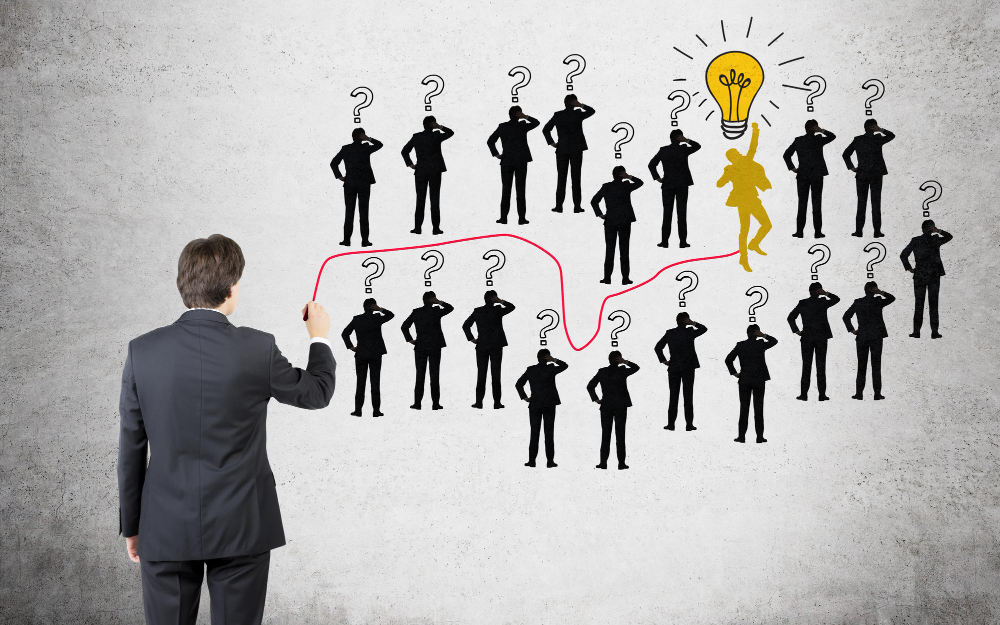
There is a question almost every CEO, CIO, CTO, and business leader is wrestling with right now.
They may not say it publicly.
They may not even say it in board meetings.
But it’s there.
It sounds like this:
-
How big should my department be?
-
How many people do I hire?
-
How many do I not hire?
-
Which roles will AI replace?
-
Which roles will AI augment?
-
Which roles will AI create?
-
When will it happen?
-
What if I move too early?
-
What if I move too late?
There has never been a moment like this in modern corporate history.
2. The Hiring Decision Has Become a Strategic Gamble
In the past, hiring was tied to growth projections:
-
Revenue forecasts,
-
Customer demand,
-
Expansion plans.
Today, hiring is tied to something else entirely:
Uncertainty about AI capability evolution.
If you hire 100 engineers:
-
Will you need them in 2 years?
-
Or will AI agents do 60% of their work?
If you don’t hire:
-
Will you fall behind competitors who scale execution faster?
Hiring is no longer just capacity planning.
It is a bet on technological timing.
3. The AI Question Is Not Binary
The mistake many organizations make is thinking in extremes:
-
“AI will replace humans.”
-
“AI is overhyped.”
-
“We must automate everything.”
-
“We must protect jobs.”
Reality is far messier.
AI agents today:
-
Can write code — but require review.
-
Can generate documentation — but miss nuance.
-
Can analyze data — but lack context.
-
Can automate workflows — but struggle with ambiguity.
They are powerful.
They are incomplete.
And that incompleteness is what creates structural confusion.
4. Where Exactly Should AI Be Used?
Leaders are asking practical questions:
-
Should AI write first drafts of code?
-
Should AI handle testing?
-
Should AI triage tickets?
-
Should AI review contracts?
-
Should AI summarize requirements?
-
Should AI replace first-level support?
And more importantly:
-
Who is accountable when AI is wrong?
-
Who audits AI decisions?
-
Who governs model updates?
-
Who ensures compliance?
These are not philosophical questions.
They are operational landmines.
5. Where Should Humans Still Lead?
Simultaneously, leaders are trying to define:
-
What roles must remain human-first?
-
Architecture?
-
Strategy?
-
Risk decisions?
-
Client relationships?
-
Creativity?
-
Crisis management?
And for how long?
Because the line keeps moving.
6. The Department Sizing Paradox
Here is the structural paradox:
If AI will do more tomorrow,
why hire heavily today?
But if AI cannot do enough today,
how do you avoid under-capacity?
If you hire too many humans:
-
You risk redundancy.
-
You create cost drag.
-
You introduce cultural resistance to automation.
If you hire too few:
-
You miss delivery targets.
-
You lose market credibility.
-
You burn out existing teams.
There is no clean answer inside the traditional org chart model.
7. The “Sudden Shift” Risk
Many organizations fear one thing above all:
Destabilization.
They fear:
-
Sudden layoffs,
-
Morale collapse,
-
Cultural fracture,
-
Public backlash,
-
Regulatory scrutiny.
They do not want a violent pivot from “human-centric” to “AI-centric.”
They want gradual evolution.
But how?
8. The Real Problem: Static Org Charts in a Dynamic Capability World
Traditional organizational design assumes:
-
Roles are stable,
-
Functions are predictable,
-
Capacity is relatively fixed.
AI breaks this assumption.
Capabilities are now dynamic:
-
Improving monthly,
-
Changing rapidly,
-
And unevenly across domains.
You cannot design a static org structure for a moving technological target.
9. Leaders Don’t Need Advice. They Need Infrastructure.
Most current solutions fall into two buckets:
-
Consulting recommendations.
-
AI tool adoption.
Neither solves the structural problem.
Consulting gives:
-
Strategy decks,
-
Transformation roadmaps,
-
Advisory frameworks.
Tools give:
-
Isolated automation,
-
Tactical productivity gains.
What leaders actually need is something else:
A structural way to evolve their organization gradually, without shock.
10. The Gradual Shift Model (Human → Human+AI → AI-Accelerated)
Think of AI integration as three phases:
Phase 1: Human-centric with AI assistance
AI acts as:
-
Co-pilot,
-
Accelerator,
-
Research assistant.
Humans remain primary decision-makers.
Phase 2: Human+AI hybrid execution
AI handles:
-
Repeatable tasks,
-
Structured workflows,
-
Documentation,
-
First-pass output.
Humans:
-
Review,
-
Govern,
-
Optimize.
Phase 3: AI-accelerated operations
AI handles most operational throughput.
Humans:
-
Focus on judgment,
-
Architecture,
-
Escalation,
-
Innovation.
The challenge is not knowing when to move between these phases — and at what pace.
11. Why Sudden Organizational Swings Fail
Organizations that attempt sudden shifts:
-
Cut headcount aggressively,
-
Automate prematurely,
-
Overestimate AI maturity,
-
Destabilize morale.
The result:
-
Delivery gaps,
-
Compliance failures,
-
Re-hiring cycles,
-
Internal resistance.
Gradual evolution is safer.
But gradual evolution requires flexibility.
Traditional org charts are not flexible.
12. The Missing Capability: Dynamic Workforce Composition
What if:
-
Your workforce size could flex without layoffs?
-
AI integration could increase without cultural trauma?
-
Human roles could gradually shift instead of disappear?
-
Capacity could scale up or down without structural shock?
This requires something most organizations do not currently have:
Dynamic workforce composition.
13. Introducing the Virtual Delivery Center (VDC) Model
A Virtual Delivery Center is not:
-
A consulting service,
-
An outsourcing vendor,
-
A staff augmentation model.
It is an execution structure.
It allows organizations to:
-
Compose teams from humans + AI agents,
-
Scale capacity up or down,
-
Adjust AI-human balance gradually,
-
Maintain governance and compliance throughout.
14. How VDC Solves the Hiring Dilemma
Instead of asking:
“How many engineers do we hire permanently?”
Organizations can ask:
“What capacity do we need this quarter?”
VDC allows:
-
Core in-house leadership,
-
Flexible human contributors,
-
Embedded AI agents,
-
Dynamic orchestration.
As AI capabilities improve,
the human-to-AI ratio adjusts naturally.
No sudden jerk.
No destabilization.
15. Where AI Agents Fit Inside VDC
AI agents inside a VDC can:
-
Generate first drafts,
-
Automate documentation,
-
Test code,
-
Monitor compliance,
-
Summarize data,
-
Accelerate research.
Humans:
-
Review,
-
Govern,
-
Decide,
-
Optimize.
As agents evolve,
their scope expands.
The structure absorbs this expansion without collapse.
16. Governance, Compliance, and Security
One of the greatest fears leaders have about AI integration is risk.
-
Data leakage.
-
Regulatory non-compliance.
-
Untraceable decisions.
-
Shadow automation.
VDC embeds:
-
Audit trails,
-
Controlled access,
-
Role-based permissions,
-
Compliance checkpoints,
-
Human oversight layers.
AI is not unleashed.
It is orchestrated.
17. Orchestration Is the Real Differentiator
The future is not about:
-
Having AI,
-
Hiring humans,
-
or Cutting costs.
It is about orchestration.
Coordinating:
-
Human judgment,
-
AI speed,
-
Economic realities,
-
and Evolving markets.
Orchestration prevents chaos.
18. Gradual Evolution Without Shock
With VDC:
-
Human roles can shift toward higher-value work,
-
AI agents can assume structured workloads,
-
Capacity can flex with demand,
-
Leaders can observe performance metrics before adjusting ratios.
Evolution becomes continuous — not disruptive.
19. Why This Resonates With Leaders
Because it acknowledges reality:
-
AI is powerful — but incomplete.
-
Humans are essential — but expensive.
-
Markets are volatile.
-
Technology is accelerating.
Leaders do not need dogma.
They need adaptability.
20. The New Organizational Design Principle
In the AI era, organizations should not be designed around:
-
Fixed headcount,
-
Static departments,
-
or Permanent role assumptions.
They should be designed around:
-
Outcomes,
-
Orchestration,
-
and Dynamic capability blending.
That is what VDC enables.
21. The Calm Transition Path
This is not about:
-
Firing people,
-
Replacing teams,
-
Chasing hype.
It is about building an organization that can:
-
Adjust human-to-AI balance gradually,
-
Evolve as technology evolves,
-
and Remain stable while doing so.
Stability does not come from rigidity.
It comes from adaptability.
22. The Real Question Leaders Must Now Ask
Not:
“How many people should I hire?”
But:
“How do I build a structure that evolves as AI evolves?”
That is the organizational dilemma of our time.
And the answer is not found in consulting slides or tool subscriptions.
It is found in execution infrastructure.
