 +91 990 880 2225
1. The Fear We Got Wrong
Every technological revolution creates fear.
When machines arrived, people feared the loss of labor.
When computers arrived, people feared the loss of jobs.
When the internet arrived, people feared the loss of privacy.
And now, with AI agents, the fear is loud and familiar:
“AI will replace humans.”
This fear dominates headlines, conference panels, investor decks, and dinner-table conversations.
But it’s the wrong fear.
AI is not coming for humans.
It’s coming for structures.
More specifically:
AI is coming for org charts.
2. The Real Problem Was Never People
Let’s be honest.
Most companies don’t fail because of a lack of talent.
They fail because of organizational friction.
The real enemies of progress are:
-
excessive hierarchy
-
slow decision loops
-
information distortion
-
coordination overhead
-
meetings about meetings
-
approvals about approvals
In other words: org charts.
Over time, organizations evolved layers not to create value — but to manage complexity.
Managers to manage managers.
Directors to align managers.
VPs to oversee directors.
Committees to “review” decisions.
The result?
The people doing the real work are often the furthest from decision-making.
AI doesn’t replace these people.
AI removes the need for the layers above them.
3. Why Org Charts Existed in the First Place
Org charts weren’t evil.
They were necessary — for their time.
They emerged because:
-
information traveled slowly
-
coordination was manual
-
trust required oversight
-
scale required control
In a pre-digital world, hierarchy was the only way to manage complexity.
You needed:
-
managers to relay information
-
supervisors to enforce consistency
-
layers to reduce chaos
The org chart was a technology — not a philosophy.
And like all technologies, it has an expiration date.
4. The Internet Flattened Communication — AI Flattens Execution
The internet already killed one layer of hierarchy: communication control.
Emails, Slack, Zoom, and shared docs removed the need for information gatekeepers.
But execution still required hierarchy — until now.
AI agents change execution itself.
They can:
-
coordinate tasks
-
track progress
-
validate quality
-
surface insights
-
enforce governance
-
trigger actions
-
close loops
All without human middlemen.
AI doesn’t replace the engineer.
AI replaces the status meeting about the engineer’s work.
AI doesn’t replace the designer.
AI replaces the review chain that slows the designer down.
AI doesn’t replace thinking.
It replaces waiting.
5. The Misunderstanding: AI as Labor vs AI as Structure
Most discussions frame AI incorrectly.
They ask:
-
“Which jobs will AI take?”
-
“Which roles are at risk?”
This is the wrong framing.
AI is not a worker.
AI is organizational infrastructure.
Just as:
-
spreadsheets replaced accounting departments
-
email replaced memo clerks
-
CRMs replaced filing cabinets
AI agents replace:
-
coordination layers
-
supervision overhead
-
reporting chains
-
manual governance
AI doesn’t do your job.
It removes the need for your boss’s boss’s job.
That’s the uncomfortable truth.
6. What AI Agents Actually Do Well
Let’s be precise.
AI agents excel at:
-
task decomposition
-
pattern recognition
-
continuous monitoring
-
rule enforcement
-
data synthesis
-
multi-threaded execution
They are terrible at:
-
human judgment
-
moral reasoning
-
context-rich creativity
-
empathy
-
intuition
-
meaning-making
In other words:
AI is perfect for orchestration.
Humans are irreplaceable for creation.
So why were humans doing orchestration for decades?
Because we had no alternative.
Now we do.
7. The Death of Middle Management (As We Knew It)
This is the part few want to say out loud.
The biggest impact of AI agents will not be on:
-
engineers
-
designers
-
scientists
-
creators
It will be on middle management.
Not because middle managers are useless —
but because their function can now be automated.
Status tracking → automated
Progress reporting → automated
Task assignment → automated
Performance monitoring → automated
When coordination becomes machine-led, hierarchy collapses naturally.
This doesn’t mean fewer humans.
It means flatter organizations.
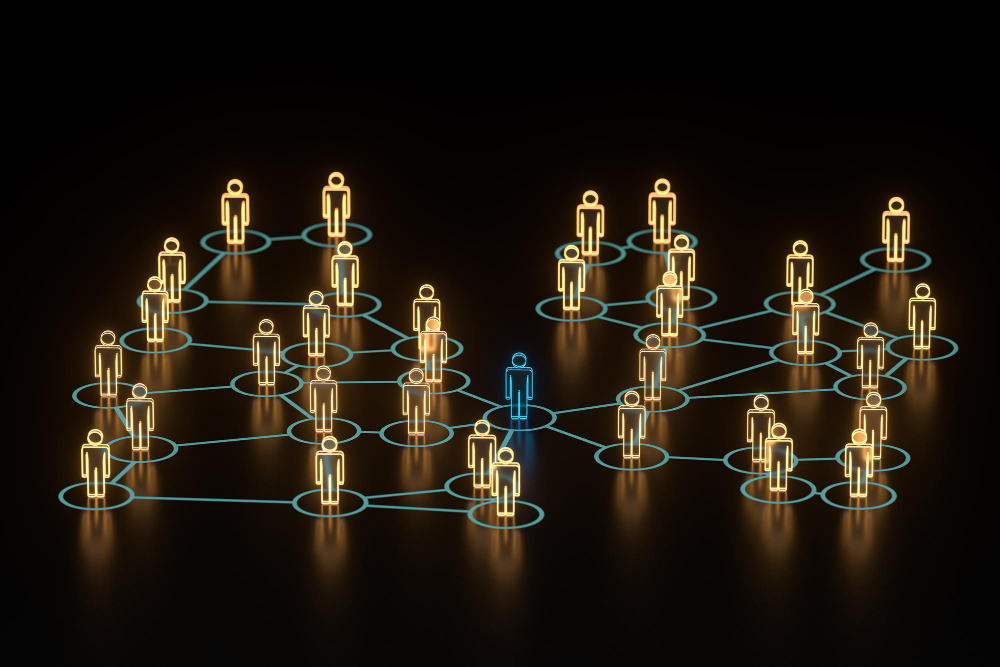
8. From Org Charts to Outcome Graphs
Here’s the structural shift underway:
Old world:
-
static roles
-
fixed reporting lines
-
permanent teams
-
hierarchical authority
New world:
-
dynamic outcomes
-
fluid participation
-
temporary assemblies
-
algorithmic coordination
Instead of org charts, we get outcome graphs.
People connect to:
-
missions
-
problems
-
deliverables
Not titles.
Not managers.
Not departments.
AI agents sit in the middle — orchestrating, not commanding.
9. Where Virtual Delivery Centers (VDCs Fit In)
This is where everything converges.
A Virtual Delivery Center (VDC) is not a team.
It’s not outsourcing.
It’s not freelancing.
It’s an org-chart-free delivery structure.
In a VDC:
-
there is no hierarchy
-
no permanent reporting lines
-
no manager layers
Instead:
-
humans contribute expertise
-
AI agents coordinate work
-
outcomes define structure
-
governance is automated
The VDC is what an organization looks like after org charts dissolve.
10. Humans Become Contributors, Not Employees
In the VDC world:
-
humans are not “resources”
-
they are contributors
They can:
-
work on multiple VDCs simultaneously
-
choose outcomes aligned with skill and interest
-
contribute without being locked into employment
-
build reputation through delivery
AI agents ensure:
-
fairness
-
visibility
-
accountability
-
continuity
Humans focus on what they do best:
-
thinking
-
solving
-
creating
-
imagining
AI handles the rest.
11. Why This Is Good News for Humans
Let’s address the fear directly.
This future is not anti-human.
It’s pro-human.
It removes:
-
bureaucracy
-
politics
-
meaningless work
-
artificial hierarchy
-
wasted time
It amplifies:
-
autonomy
-
mastery
-
creativity
-
impact
-
freedom
For the first time, humans are freed from organizational gravity.
12. The New Shape of Companies
Companies won’t disappear.
But they will look very different.
Future companies will have:
-
a small strategic core
-
AI-driven orchestration
-
multiple VDCs for execution
-
fluid contributor networks
They will be:
-
leaner
-
faster
-
more resilient
-
less political
-
more outcome-driven
The org chart becomes a relic — like the fax machine.
13. Why This Shift Is Inevitable
This isn’t ideology.
It’s economics.
Hierarchy is expensive.
Coordination overhead doesn’t scale.
Speed matters more than control.
AI agents offer:
-
infinite coordination at near-zero cost
-
perfect memory
-
unbiased enforcement
-
real-time optimization
Once this exists, going back to human-heavy org charts is irrational.
Just like once cloud computing existed, owning servers became irrational.
14. The Real Question Leaders Should Ask
The question is no longer:
“Will AI replace humans?”
The real question is:
“Why are we still structuring work around org charts at all?”
The leaders who ask this early will:
-
move faster
-
attract better talent
-
unlock more creativity
-
build future-ready organizations
Those who don’t will defend hierarchy — until it collapses under its own weight.
15. The AiDOOS Perspective
This is precisely why platforms like AiDOOS exist.
AiDOOS isn’t about:
-
replacing people
-
automating jobs
-
reducing headcount
It’s about:
-
replacing org charts with VDCs
-
replacing hierarchy with orchestration
-
replacing employment with contribution
-
replacing friction with flow
AI agents are the nervous system.
Humans are the intelligence.
VDCs are the muscles.
Together, they form a new organism of work.
16. The Next Decade of Work
Over the next 10 years:
-
org charts will shrink
-
middle layers will dissolve
-
contributors will outnumber employees
-
AI agents will run coordination
-
VDCs will power delivery
This will feel chaotic at first —
just like the internet once did.
Then it will feel obvious.
And then we’ll wonder how we ever worked any other way.
17. Conclusion: AI Doesn’t Replace Humans — It Liberates Them
AI agents are not here to take your job.
They are here to take:
-
your status meetings
-
your reporting chains
-
your approval delays
-
your organizational drag
They replace structure, not soul.
They replace org charts, not people.
And in doing so, they return work to its original purpose:
creation, contribution, and progress.
This is not the end of human work.
This is the end of unnecessary hierarchy.
And that’s the best news work has had in a century.
